Research in progressNovember 2026
Doin' it Right
In-Context Dexterous Manipulation from a Single Numerical Demonstration
We study which parts of a robot demonstration help a multimodal model perform dexterous manipulation.
Open a micropipette box
STATE ONLY · SEED 0Lift a carton
STATE ONLY · SEED 7Set a cup upright
STATE ONLY · SEED 8demonstration per task
in HandsOn
for each task
Method
Numerical demonstrations
We give a multimodal model one robot trajectory as context and use its predictions to control the hands. The model runs without task-specific fine-tuning.
Each trajectory contains timestamps, 52-dimensional measured states, and 52-dimensional action commands. The state records both palms’ positions and rotations, together with 40 finger joint angles.
During execution, the model receives the task instruction, three RGB views, measured robot state, and execution feedback. It predicts palm and finger targets, then observes the result before issuing the next command.
Model input and output
T18 · State Only · seed 0 · request 01 → 02FIXED INPUT
Numerical demonstration
Episode 14175 · 25 frames
52D measured state + timestamps
LIVE INPUT
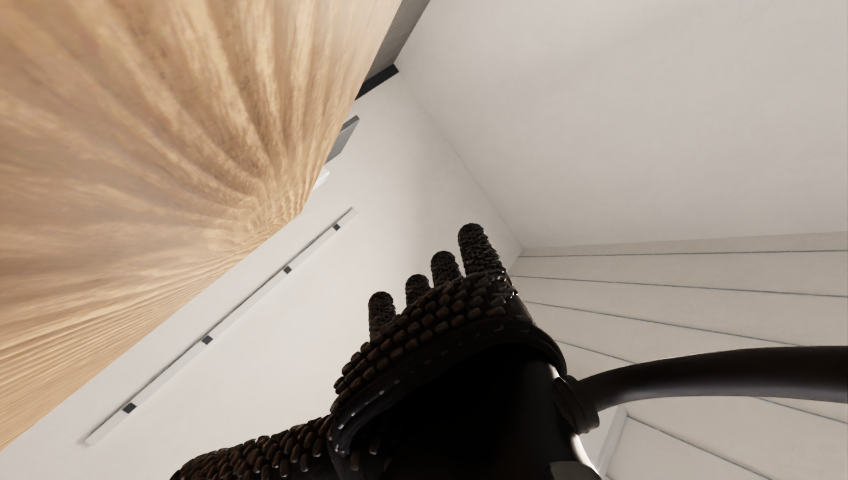
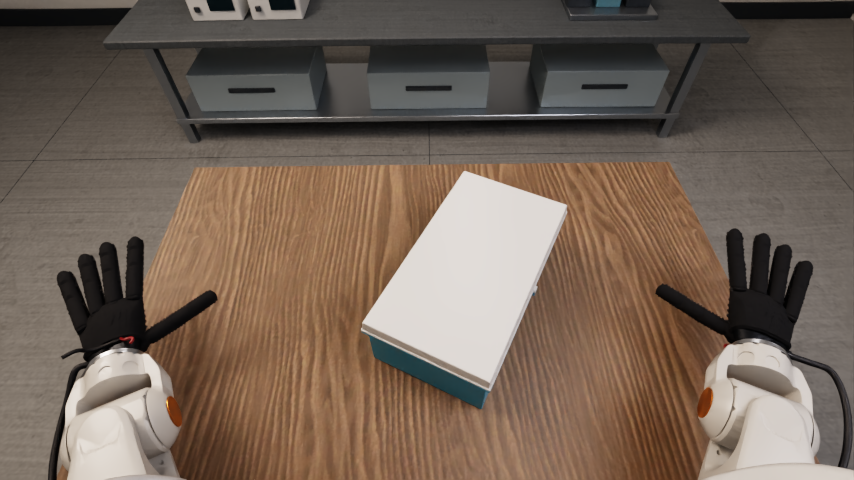
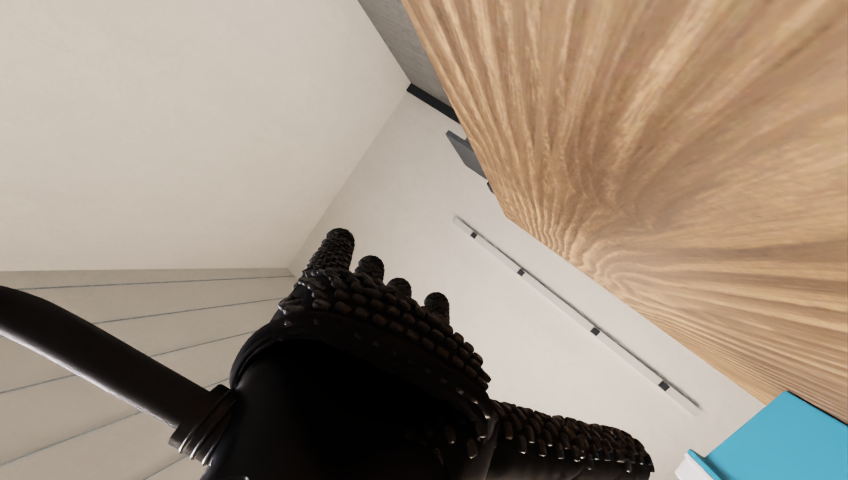
Current observation
Instruction · three RGB views
Measured robot state
AFTER EXECUTION
Execution feedback
schedule_executed
13 control steps executed
MODEL
Multimodal model
gpt-6.1-terra
high reasoning
CONTROL
Native controller
HandsOn · PhysX · 30 Hz
Palm pose and finger targets
REFERENCE
Measured state
Palm position
mRotation vector
radFinger joints
rad| Finger | J1 | J2 | J3 | J4 |
|---|---|---|---|---|
| Thumb | 1.148 | 0.413 | 0.067 | 0.069 |
| Index | 0.454 | -0.188 | -0.042 | -0.019 |
| Middle | 0.302 | -0.215 | -0.042 | 0.058 |
| Ring | 0.232 | -0.070 | -0.032 | 0.061 |
| Little | 0.133 | -0.025 | -0.009 | 0.152 |
PREDICTION
Control target
Palm position
mPalm orientation
°Finger joints
rad| Finger | J1 | J2 | J3 | J4 |
|---|---|---|---|---|
| Thumb | 1.180 | 0.440 | 0.060 | 0.070 |
| Index | 0.470 | -0.200 | -0.050 | -0.020 |
| Middle | 0.310 | -0.230 | -0.050 | 0.064 |
| Ring | 0.230 | -0.070 | -0.040 | 0.067 |
| Little | 0.130 | -0.020 | -0.010 | 0.166 |
Experiments
Evaluation on three tasks
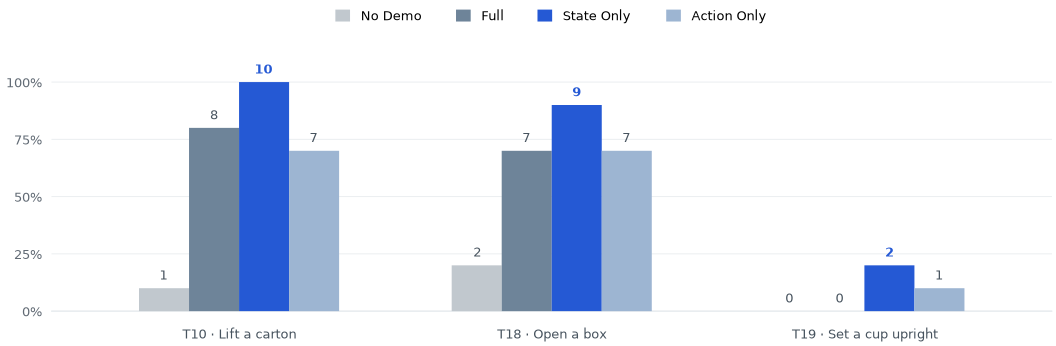
We compare four demonstration settings on carton lifting, box opening, and cup reorientation, with 10 trials per task and condition.
No Demo
No referenceInstruction and live observations
Full
State + action + timeMeasured motion and command labels
State Only
State + timeMeasured motion as the reference
Action Only
Action + timeCommand labels as the reference
Task success
| Task | No Demo | Full | State Only | Action Only |
|---|---|---|---|---|
| T10Lift a carton | 10%1 / 10 | 80%8 / 10 | 100%10 / 10 | 70%7 / 10 |
| T18Open a micropipette box | 20%2 / 10 | 70%7 / 10 | 90%9 / 10 | 70%7 / 10 |
| T19Set a cup upright | 0%0 / 10 | 0%0 / 10 | 20%2 / 10 | 10%1 / 10 |
State Only has the highest success rate on all three tasks. In carton lifting, it averages 20.1 model requests per trial; Full averages 38.5.
Model requests
Mean model requests per trial, including within-trial retries.
| Task | No Demo | Full | State Only | Action Only |
|---|---|---|---|---|
| T10Lift a carton | 55.6 | 38.5 | 20.1 | 29.7 |
| T18Open a micropipette box | 38.6 | 34.5 | 21.0 | 21.7 |
| T19Set a cup upright | 21.4 | 27.4 | 26.1 | 21.7 |
Videos
Rollout comparisons
For each task, the four conditions are shown at the same seed.
Showing Open a micropipette box · seed 0 · front camera
No Demo
○ FailureFull
○ FailureState Only
● SuccessAction Only
○ FailureT18
State-component ablation
We evaluate every subset of palm position (P), palm rotation (R), and finger joints (H) from the T18 state trajectory, with 10 trials per subset.
Reference fields
90% success
| Subset | P | R | H | Dims | Success | Seeds 0–9 | |
|---|---|---|---|---|---|---|---|
| PRH | ● | ● | ● | 52 | 9/10 | ||
| PR | ● | ● | — | 12 | 4/10 | ||
| PH | ● | — | ● | 46 | 1/10 | ||
| RH | — | ● | ● | 46 | 1/10 | ||
| P | ● | — | — | 6 | 1/10 | ||
| R | — | ● | — | 6 | 1/10 | ||
| H | — | — | ● | 40 | 0/10 | ||
| META | — | — | — | 0 | 2/10 | ||
Blue dots mark successful trials. PRH uses the T18 State Only results above.
META: demonstration instruction, field descriptions, and timestamps.
Full state: 9/10
PR is the strongest reduced reference at 4/10. PH and RH each reach 1/10.
Protocol
Experimental setup
Each task uses one official training episode, retaining all frames and the original timestamps. Every trial has a budget of 100 model requests, with up to 4,096 output tokens per request.
| Task / reference episode | Reference frames | Control-step budget |
|---|---|---|
| T10Lift a carton / 6103 | 244 | 864 |
| T18Open a micropipette box / 14175 | 25 | 375 |
| T19Set a cup upright / 1503 | 67 | 222 |
HandsOn runs at 30 Hz with the native controller. T10 scoring uses bimanual support, lift, and hold; contact force is recorded for diagnostics.
Experiments use HandsOn official demonstrations and simulation environment.